Non-theist Christian and elder in Community of Christ. I have Mormon roots and aspirations to do better with justice and peacemaking—especially in the digital sphere but also in Lexington, Kentucky, the U.S., and the world more broadly.
You can subscribe to this content through this RSS feed or this Mastodon account. You can also subscribe to all of the content on this website through this RSS feed, this Bluesky account, or this newsletter.
I sometimes write in French! To only see the French content (which is also available below, alongside English content), please click on [fr] in the site header.
🔗 linkblog: Bannon’s Salute at CPAC Sparks Outcry, Even on French Right'
If Jordan Bardella thinks it was a Nazi salute… gift link
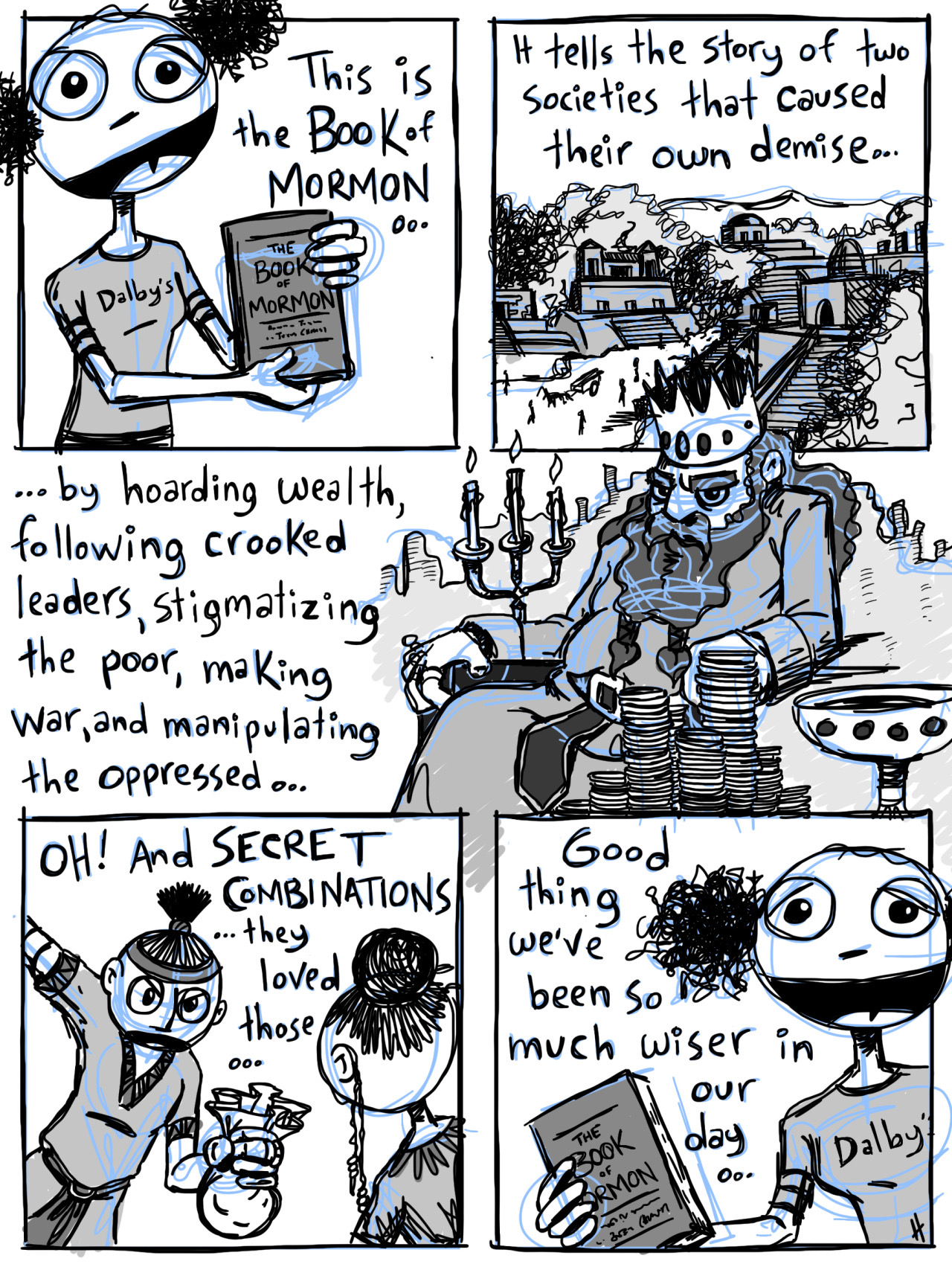
🔗 linkblog: DOGE Puts $1 Spending Limit on Government Employee Credit Cards'
DOGE continues to insist on the dumbest way to carry out its dumb goals.
🔗 linkblog: Trump State Department official has called for mass sterilization of ‘low-IQ trash’'
It’s all bad right now, but it’s still important to call out the particularly bad stuff.
🔗 linkblog: Trump firings cause chaos at agency responsible for America's nuclear weapons'
One more thing right out of the Twitter playbook from DOGE: Firing people without understanding how important they are.
📚 bookblog: ❤️❤️❤️🖤🖤 for The Utopia of Rules: On Technology, Stupidity, and the Secret Joys of Bureaucracy, by David Graeber
When I was in grad school, I was pretty centrist: more liberal than most of the students from BYU (where I’d just finished my bachelor’s) but more conservative than most of the students at MSU. I had an odd experience one day when a fellow student far, FAR to the left from where I was teasingly chided me for a Facebook post I’d made defending Common Core from one of my BYU friends who was convinced it was a communist plot. This really confused me, since it had never occurred to me that one could critique Common Core from the left.
🔗 linkblog: Trump Is Just Threatening to Do Something Stupid as a Terrible Negotiation Tactic'
Bookmarking this in case I need to show it to a family member.
📚 bookblog: ❤️❤️❤️❤️🖤 for Joseph Smith and the Mormons, by Noah Van Scriver
This is an excellent graphic novel adaptation of the earliest of Mormon history. The art is good, the story is compelling, and I enjoyed reading it. I came close to buying this twice in the past year after finding it in comics shops, and I was delighted to find that my local library had a couple of copies.
I do wish that I either knew a lot more history or a lot less history going into this. The details of Joseph Smith’s life and early Mormon history are sometimes sparse or ambiguous; more importantly, they’re hotly contested. I don’t mind at all a critical take on Smith, but even though the author is clearly respectful of the historical figure even with his warts and all approach, there’s a deeply ingrained Mormon skepticism in me that wonders if any of the choices verged on the salacious. That’s not a critique of the book so much as a personal observation and a wish that I could have enjoyed the story while setting aside the instinct to be skeptical of non-LDS tellings of the history (which is all the more ridiculous given that I’m going on 5 years of not practicing in that faith).
🔗 linkblog: Normalizing Indian Hate Makes Me a Good Father and Husband'
McSweeney’s pulls no punches, but Vance has earned no mercy.
📚 bookblog: ❤️❤️❤️❤️🖤 for Decolonizing Palestine: The Land, The People, The Bible, by Mitri Raheb
This book has been on my radar for a few months, and I’m glad to have found an audiobook I could check out (though I doubt I’d have regretted an impulse buy—this would be a good book to have on hand).
Palestinian Christian ministers and theologians always call me to account in a way that I appreciate. I don’t think I should need someone from my own faith tradition (broadly speaking) to tell me how bad the situation in Palestine is (i.e., I should have already figured that out by now), but this book pushed my thinking in ways that are going to stick. I’m more informed than many on Israel and Palestine thanks to a few classes in college, but this still brought in new perspectives that had never really landed before.
🔗 linkblog: How close is Elon Musk to controlling a nuclear weapon?'
The headline is a little provocative, but it’s scary that we live in a world where it makes some sense.
More broadly, though, I found that the first Trump administration converted me to nuclear disarmament—yes, this president is scary, but that any president has access to that much destructive power is scarier still. I expect I’ll go further in that direction this time around.
🔗 linkblog: Staffer with Elon Musk's DOGE amplified white supremacists online'
Starting to sense a pattern.
🔗 linkblog: Trump’s FBI Pick Kash Patel Took Up to $5M in Stock From Chinese Ecommerce Giant Shein'
The rules seem to be that it’s okay to do whatever in the GOP, but no Democrat can even seem to be in a sticky situation. What a joke.
📚 bookblog: ❤️❤️❤️❤️🖤 for Debt: The First 5,000 Years, by David Graeber
Like everything I’ve read from Graeber, I appreciate the overall argument that he’s making and I find the evidence he marshalls compelling. At the same time, there’s a density to the latter that I admit having trouble following, so I don’t always see how it leads to the overall argument.
Even with those caveats, I’m happy to endorse this read. I’m interested in how Graeber explores the relationship between moral thinking and economic modeling—as I posted earlier, I also find his thoughts on the moral dangers posed by abstracting interpersonal obligations into quantifiable debt with the help of money.
🔗 linkblog: First Cracks Appear: Some Conservatives Admit We’re In A Constitutional Crisis'
As usual, lots to like in this post from Mike Masnick.
🔗 linkblog: A 25-Year-Old With Elon Musk Ties Has Direct Access to the Federal Payment System'
Resubscribed to WIRED because despite my efforts to focus more on tech news than political news, THEY HAVE BECOME ONE AND THE SAME IN REALLY WORRYING WAYS.
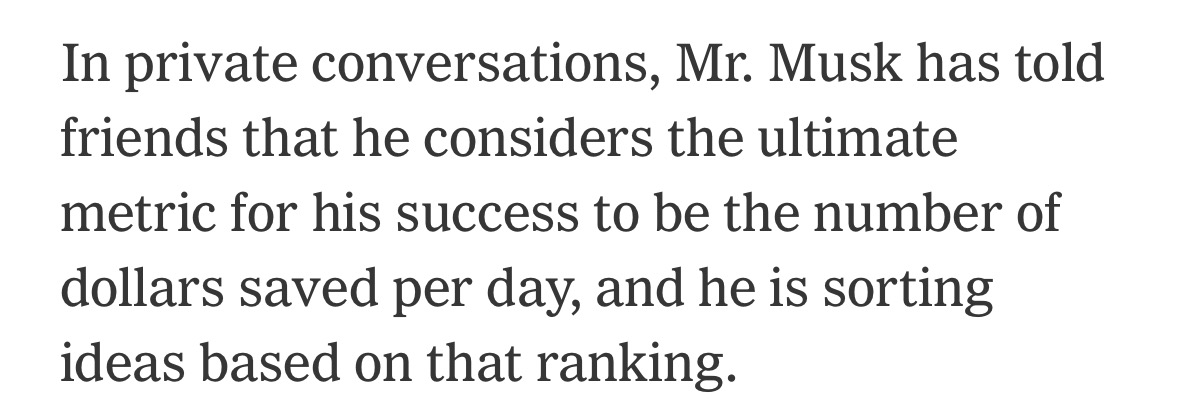
🔗 linkblog: The Twitter Files Playbook Comes For The US Government'
More good writing from Masnick on scary stuff coming out of DC.
🔗 linkblog: The NTSB chooses Elon Musk’s X to update the press on plane crashes'
Lots of bad things are happening right now, but this one stands out. There’s no good reason for this except to make Musk happy.
Some Bluesky posts are reminding me of what I wrote about how my LDS mission sometimes played fast and loose with immigration documents:
https://spencergreenhalgh.com/communities/the-missionary-with-the-expired-visa/
🔗 linkblog: I Don’t Have Words'
I always appreciate Sam’s writing and especially here. I’m waiting to see what—if anything—my current church has to say about the current mess, but I have a deep fondness for the church I grew up in, and it’s deeply disappointing for a rich church that is willing to throw those resources behind its interests to decide that combatting the present cruelty is not one of those interests.