Research Ethics
- | linkpost |
digital methods |
Discord |
research ethics |
I confess that I would have found this interesting in an earlier part of my career. Now, though, I’m reminded that I built that career on a methodological approach that’s uncomfortable close to surveillance, and I don’t love that.
In response to "Researchers Scrape 2 Billion Discord Messages and Publish Them Online," on 404media.co.
- | micropost |
generative AI |
internet research |
Reddit |
research ethics |
I doubt I have time today for a longer, more nuanced post, so please enjoy this subtweet: Anyone whose takeaway from the University of Zurich Reddit study is “AI is good at convincing people!” and doesn’t even mention the HUGE ethical issues in passing is missing the point.
- | linkpost |
CI 780 |
Reddit |
research ethics |
social media |
I’ve been waiting for 404 (or someone else) to report on this so that I could rage post it (and assign it in future classes). What a terrible breach of research ethics.
In response to "Researchers Secretly Ran a Massive, Unauthorized AI Persuasion Experiment on Reddit Users," on 404media.co.
- | photopost |
DezNat |
internet research |
online Mormonism |
research ethics |
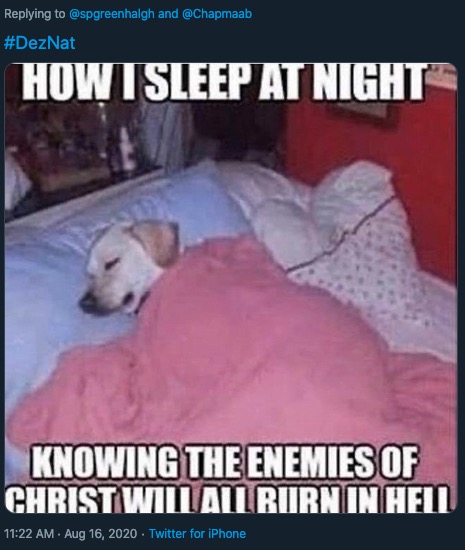
Tonight’s ethics lecture for my internet research class this semester will include a brief discussion of protecting researchers, so I got to go through my collection of screenshots of when a reactionary Mormon group took issue with our studying their posts.
Read whole post - | micropost |
RCR |
research compliance |
research ethics |
My most recent research compliance completion certificate was clearly thrown together in a few lines of HTML. Not only does that feel especially phoned in, but it also makes it harder to save for my records, which is the only useful aspect of one of these certificates.
- | macropost |
assessment |
learning |
research |
research ethics |
teaching |
on the performativity of teaching
Read whole postBefore writing what I want to write, I want to make a few things clear. Teaching is an important and noble profession, I love being a teacher, and it’s possible (and often easy) to distinguish between better and worse ways of teaching. With that out of the way, I want to start off this post by arguing that teaching is less of “a thing” than learning is. That is, learning is the real phenomenon here, and teaching is sort of an auxiliary practice that aims to support learning but can’t ever quite be the same thing.
- | macropost |
DezNat |
digital methods |
digital traces research |
Elon Musk |
far right |
JMSSA |
MSSA |
online Mormonism |
research ethics |
Twitter |
follow up on research ethics implications of Twitter's 'general amnesty'
Read whole postThis is just a few words to say that this post that I wrote back in December 2022 has suddenly become relevant.
- | linkpost |
digital traces |
ethics |
LGBTQ |
research ethics |
I hated this project when I read about it in The Verge 5 years ago. I hate it even more now.
In response to "Facial Recognition Researcher Left a Trans Database Exposed for Years After Using Images Without Permission," on vice.com.
- | macropost |
DezNat |
digital methods |
digital traces research |
Elon Musk |
far right |
JMSSA |
MSSA |
online Mormonism |
research ethics |
Twitter |
unexpected research ethics implications of Twitter's 'general amnesty' for suspended accounts
Read whole postFor over three years now, I’ve been getting increasingly involved with research projects that involve the online far right in one way or another. One of the most interesting ways that I’ve developed as a researcher during this time is having to think through in greater detail my commitments to research ethics. Because my research typically focuses on public social media data, I am rarely required to obtain informed consent from those whom I study. Of course, I agree with many internet researchers that this does not absolve me of my ethical responsibilities (I find Fiesler and Proferes’s 2018 paper on this subject particularly helpful). This becomes even trickier, though, when the unwitting “participants” in my research espouse views that I find objectionable. To what extent do I, as a researcher, owe a Twitter (or Gab) user privacy and dignity if they are engaged in homophobic, misogynist, or white nationalist behavior? I’m still figuring this out, but my approach right now—informed heavily by this paper—is to try to err on the side of respect for the user whenever possible.
- | linkpost |
data brokers |
data ethics |
data for good |
digital methods |
EFF |
ethics review boards |
IRBs |
location data |
research |
research ethics |
I hadn’t realized so many academics were working with data brokers. It’s kind of scary! The EFF has some good points here about so-called “data for good”—and rightly brings up that ethics review boards should be thinking about this sort of thing.
In response to "Bad Data “For Good”: How Data Brokers Try to Hide in Academic Research | Electronic Frontier Foundation," on eff.org.
- | macropost |
Andrew Torba |
DezNat |
digital labor |
doxxing |
far right |
Gab |
Mastodon |
qualitative research |
research ethics |
surveillance |
some thoughts on Gab pushback against research on Gab
Read whole postI’m not going to link to it, but I am fascinated by a recent post on the Gab blog where Andrew Torba announced some new features to help Gab users push back against research on the platform. Not only do I have two or three ongoing projects using Gab data (one is in the very, very early stages and—ironically—uses Gab blog posts), but some of what Torba wrote also aligned with some of the (fortunately mild) trolling my co-author, Amy Chapman, and I have experienced because of my work on the far-right-influenced DezNat hashtag in Mormon Twitter. So, I thought I’d write up some of what stood out to me in the post.
- | micropost |
data |
Facebook |
privacy |
research ethics |
Give me the confidence of a FB employee wringing hands about researchers’ allegedly “put[ting] people’s data or privacy at risk.”