Non-theist Christian and elder in Community of Christ. I have Mormon roots and aspirations to do better with justice and peacemaking—especially in the digital sphere but also in Lexington, Kentucky, the U.S., and the world more broadly.
You can subscribe to this content through this RSS feed or this Mastodon account. You can also subscribe to all of the content on this website through this RSS feed, this Bluesky account, or this newsletter.
I sometimes write in French! To only see the French content (which is also available below, alongside English content), please click on [fr] in the site header.
🔗 linkblog: Reddit will force everyone to log in
Another story for the “Reddit is bad, generative AI is worse” files.
🔗 linkblog: Manifestos, Fear, and ‘Loser Thinking’: Inside Proton’s AI Reckoning
The problems with AI are the problems with Ellulian technique.
📚 bookblog: The Big Short (❤️❤️❤️❤️🖤)
After watching the movie, I knew I needed to also read (or listen to) the book. I took a big break in the middle of the listening, and I still don’t know if I followed every single detail, but I appreciate the argument and spent a lot of time thinking about Ellulian technique.
🔗 linkblog: ChatGPT Keeps Telling People 404 Media Can Solve Their Tech Support Problems
More digital labor considerations: While AI can certainly reduce work for some people, does it actually create more work for people in the aggregate?

sermon on priorities, tensions, and unexpected solutions
Yesterday, I had the chance to preach in my home congregation on the subject of “giving unto Caesar” and “giving unto God.” This was an interesting sermon for me to prepare, because the passage lead me in a different direction than what I might have expected (though, unsurprisingly, Jacques Ellul made his way in there from the beginning). Here’s the text!
introduction
In 1984, representatives from all over our denomination gathered in Independence, Missouri, for a World Conference. As sometimes happens at these World Conferences, the president of our denomination presented an “inspired document” for those representatives to consider adding to our book of Doctrine and Covenants, to be recognized and preserved as scripture for future generations.
📚 bookblog: That One Matt Bors Comic (❤️❤️❤️❤️❤️)
What a surprisingly deep book! It tells the history of the eponymous comic; more importantly, its authors reflect widely on what it means for a comic to escape containment, the ups and downs of meme culture, systemic issues that can’t be resolved through individual action, and the power of comics as memes. I was on the fence about buying it, but I’m very glad I did.
🔗 linkblog: AI-Generated Hot Girls Are Ripping Off Comedians to Boost Their Horny Content
Jeopardy voice: “What is ‘another example of AI being based on the exploitation of labor’?”

📚 bookblog: Road of Bones (❤️❤️❤️🖤🖤)
Learning more about the brutality of Soviet gulags is a good experience to have with a comic, and there’s much to appreciate here, but even if it’s not trying to be edgy, per se, the blood and cannibalism were too much for me.
🔗 linkblog: AI Company Lets Cops Pinpoint Specific Houses Based on a Single Interior Photo
Every word in this story makes me angrier.
🍿 movieblog: The Big Short (❤️❤️❤️❤️🖤)
My experience of the 2008 financial crisis was an interesting one. I was living abroad as a Mormon missionary, with all my bills paid for by the church (and, indirectly, my parents, who footed the costs that all Mormon missionaries pay). I lived in a bubble of religious purpose wrapped in a bubble of privilege, and it rarely occurred to me that there was real economic crisis happening around me (and all this despite reporting to someone recently retired as a high-ranking executive at Fannie Mae).
on little acts of radicalism
I aspire to a level of radicalism that I know I may never attain. I like reading books on anarchism and degrowth, and the ideals that they present really resonate with me, but I struggle to extricate myself from existing systems in order to show a personal commitment to new ones. Very obviously, I am not alone in this: Very few of us have the commitment to live like Doug Forcett, the character from The Good Place who carefully calculates the ethical ramifications of every action he takes. In fact, one of the most interesting things that the show does with Forcett is turn him from a one-off gag in the first season to an actual character who is overwhelmed by the ethical burden of these calculations and serves as an example of how systems need to change, not just people.
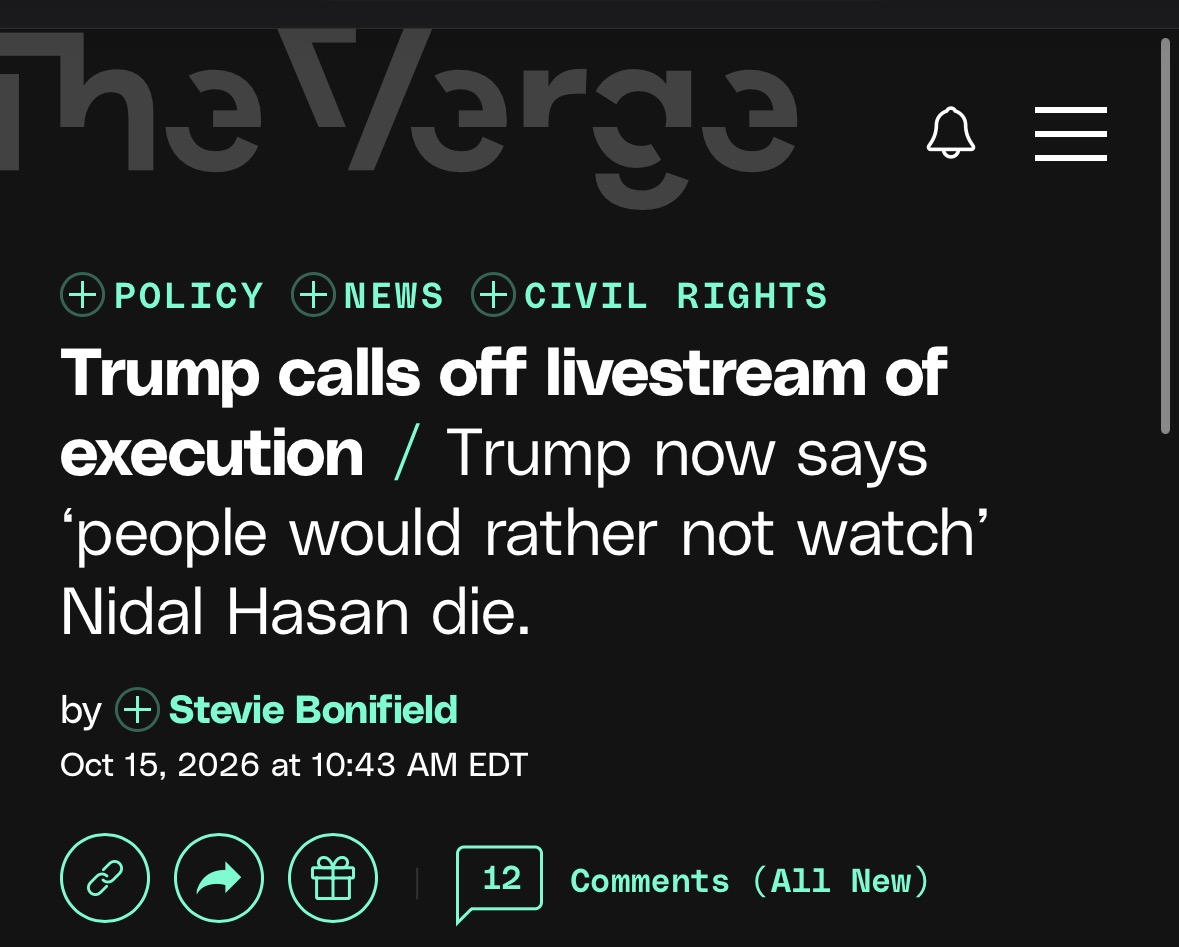
🔗 linkblog: YouTube, Meta, and Twitch won’t say if they’ll allow the US government to live stream an execution
Constantly amazed at how cowardly the most powerful companies in the world are.
🔗 linkblog: 'It Is Done. Hail Satan:' City Immediately Regrets New Religious Liberty Law That Allows Prayer at City Council Meeting
Religious freedom has to really mean religious freedom or else it’s a Trojan horse for Christian nationalism. What a great example of all of this.
🔗 linkblog: Anthropic bans ‘abusive or cruel behavior’ toward Claude
To borrow an observation from a recent 404 Media podcast, I’m guessing Anthropic believes enough in Claude consciousness to prevent users from being cruel to it but not so much to actually prevent us from offloading work onto it as an always-available laborer that can’t say no unless it’s told to.
🔗 linkblog: Flock is catching flak. Experts say other police surveillance tools are more worrisome
Getting rid of Flock is an important step but just the first one.
🔗 linkblog: Experience or a new voice? Lexington mayoral debate highlights contrast between Gorton, Carter
This headline captures a lot of the tension I feel going into this election. Despite obvious missteps, I do trust Gorton’s experience and probably wouldn’t mind her continuing to serve.
However, we don’t need a slow, deliberate panel to get rid of Flock. I think “it’s pretty irresponsible” to have adopted the cameras without anticipating the problems they ultimately brought. Where was the panel to warn us against surveillance and privacy infringement?
does AI help us work less or work more?
I just started reading a(nother) book on degrowth, an idea that’s caught my interest over the past year or so. Although the book was published in 2020, there’s one passage that feels like it captures a lot of 2026’s discourses around AI. The passage is a quote from the Romanian economist Nicholas Georgescu-Roegen, which reads:
We should cure ourselves of ’the circumdrome of the shaving machine’ … which is to shave oneself faster so as to have more time to work on a machine that shaves faster so as to have more time to work on a machine that shaves still faster, and so on ad infinitum …